
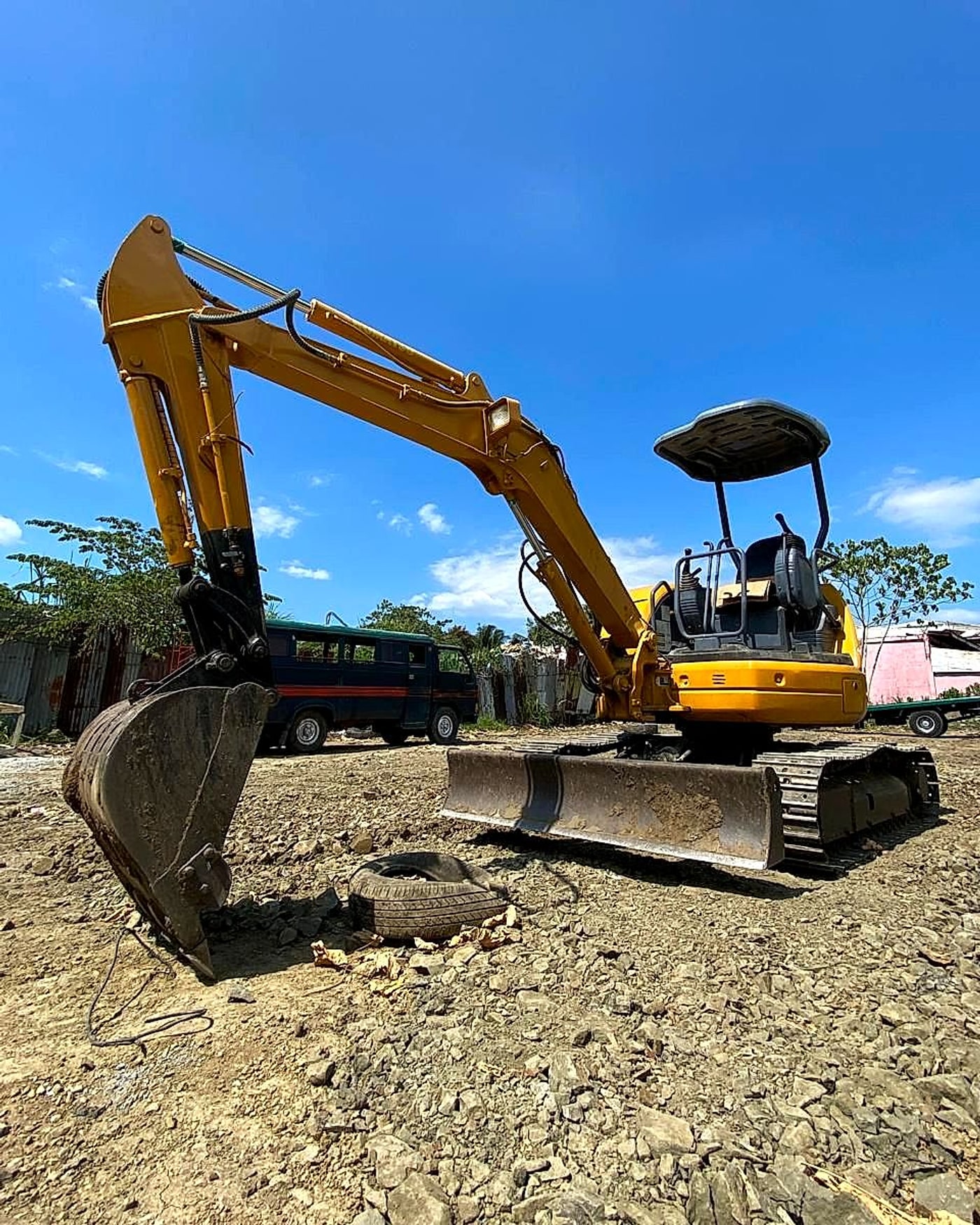
The excavator is the most-rented machine on most Philippine job sites — and the one contractors most often get wrong on size. Too small and the work drags. Too large and you pay for capacity you cannot use, plus a heavier transport bill.
Start with the work, not the machine
Before looking at models, write down the digging depth you need, the reach across trenches or foundations, the bucket volume that keeps your trucks moving, and the material — soft soil, clay, or rock changes everything.
Match the size class
- Mini (1–6 tons): tight sites, landscaping, utility trenches, residential work. Fits through gates, low ground pressure, easy to move.
- Standard / midi (7–20 tons): the workhorse class for general construction, foundations, drainage, and road works.
- Large (20 tons and up): bulk earthmoving, quarrying, and large infrastructure. Needs space to work and a lowbed to transport.
Check access and ground conditions
Measure gate widths, watch for overhead lines, and be honest about soft ground and slope. A machine that cannot get in, or that keeps sinking, is the wrong machine no matter how well it digs.
Weigh transport and cost
Bigger machines cost more per day and more to deliver. Right-sizing almost always beats over-sizing.
Not sure which class fits? Send us the dig depth, material, and access details and we will recommend one.